38th Annual Media Arts Scholarship Exhibition
my room
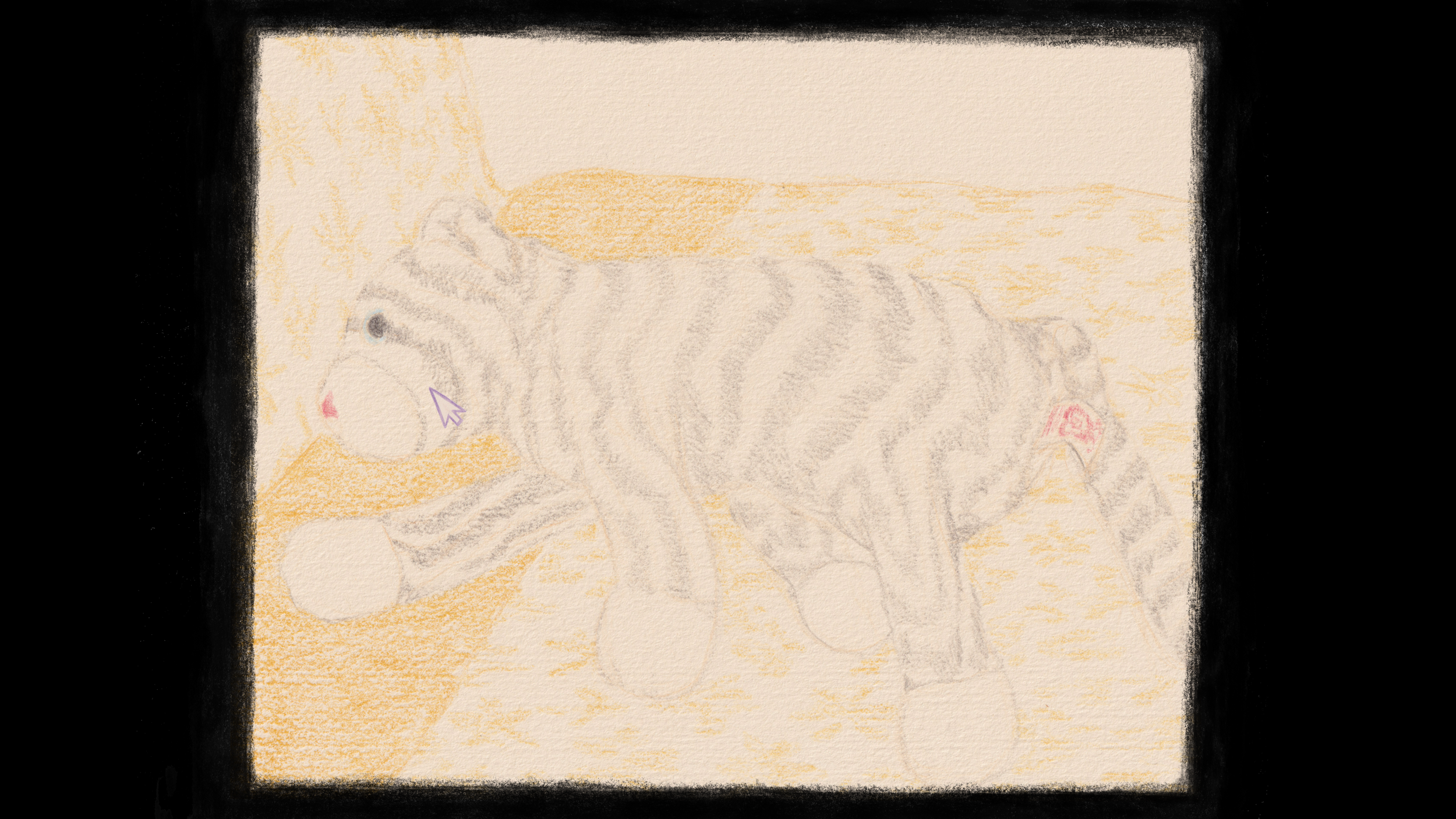
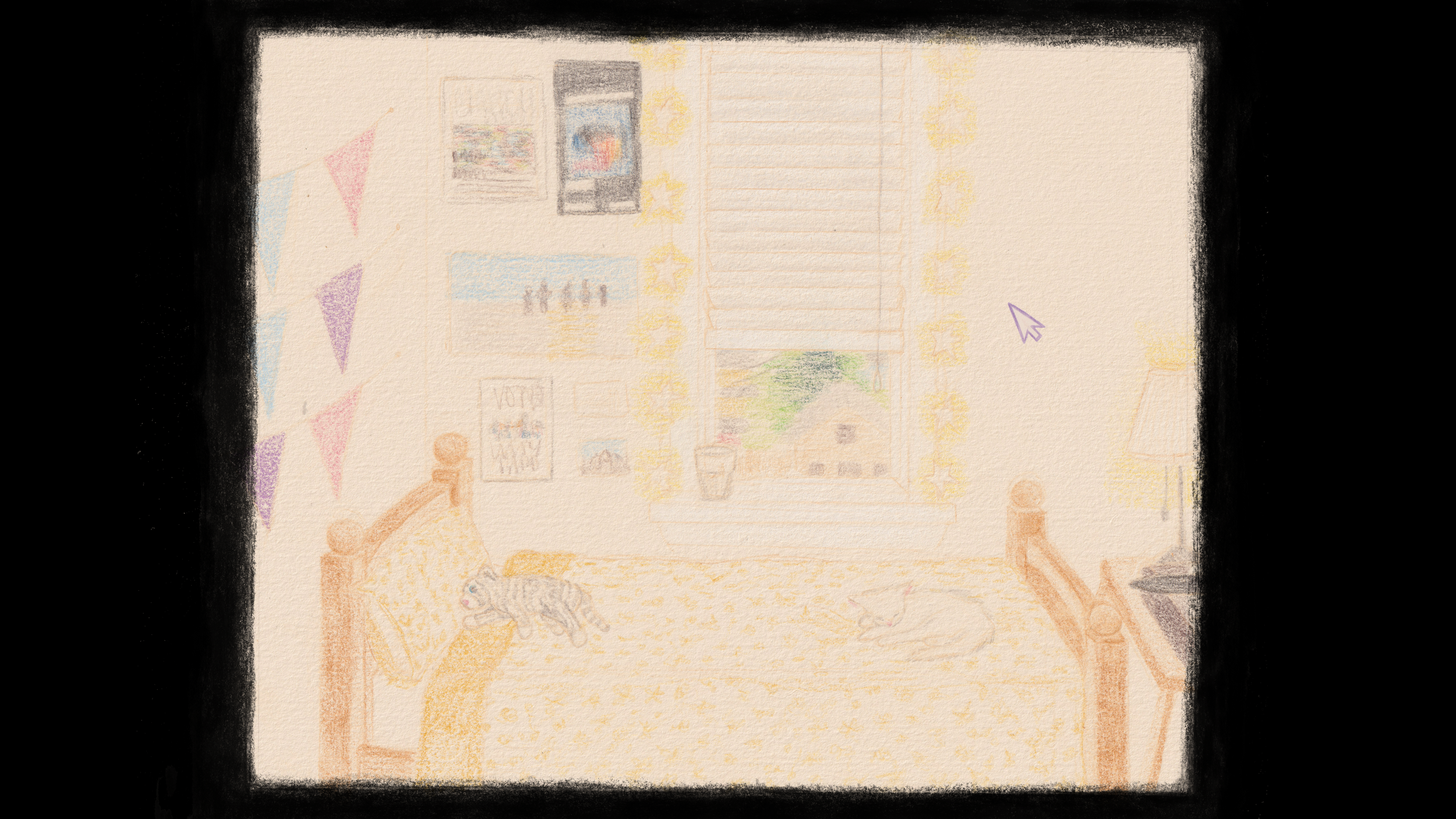
Through the combination of colour pencil drawings and digital point-and-click mechanics, Emily Flinn reflects on the relationship between temporality in both memory and domestic space. my room invites the viewer to explore a rendition of her room through the screen as a point-and-click ‘video game’. Focusing on a period of angst and personal melodrama, Flinn hand-draws her teenage bedroom from memory. ‘my room’ invites the viewer to move through this ephemeral space as a point-and-click ‘video game’ as if they were remembering it themselves. Flinn often finds herself returning, mentally and sometimes physically, to this ‘room’ during transient periods in her life. When emotions are heightened in times of change, she is reminded of the adolescent volatility that comes with ‘coming of age’. Keeping this connection in mind, Flinn considers the temporality and permanence of her room as both a concept and a physical space.
The artist offers; “My room is both permanent and temporary. There will always be a space I call ‘my room’, and in this way it is permanent. However, the physical space the words ‘my room’ describes, has moved from house to house throughout my life, in this way rendering it temporary. The physical space my teenage bedroom occupied will keep changing; from an office, to a storage room, to someone else’s room, to air. Whether or not I refer to the space itself, or what these words define, my room is, and always will be, a transient space—hanging in limbo, for me to return to and revisit when I, too, feel transient. In this work, I invite you to join me in going to ‘my room’.”
Artist Bio:
Emily Flinn is a Vietnamese Canadian interdisciplinary artist residing in Kjipuktuk (Halifax, NS). Working with traditionally analogue mediums—painting, various printmaking techniques, and drawing materials, Flinn imbues her work with experiences of the liminality and ambiguity she feels from her cultural identity and lived experiences. Though she explores personal subject matter and experiences that are oftentimes heavy, Flinn values adding a sense of humour, striking a balance of thoughtfulness and playful warmth. She is interested in themes pertaining to the physicality of the body, permanence versus temporality in physical space, and how these ideas both interact with memory and identity. Currently, she is experimenting with media art mediums, in particular video games, and mixing her love of analogue mediums with her personal history and experience of growing up in a digital age. Flinn completed a Bachelor of Fine Arts in Interdisciplinary Arts at NSCAD University in 2024 where she co-curated her graduating class's final group exhibition. She has exhibited across Canada, and has sold work internationally.
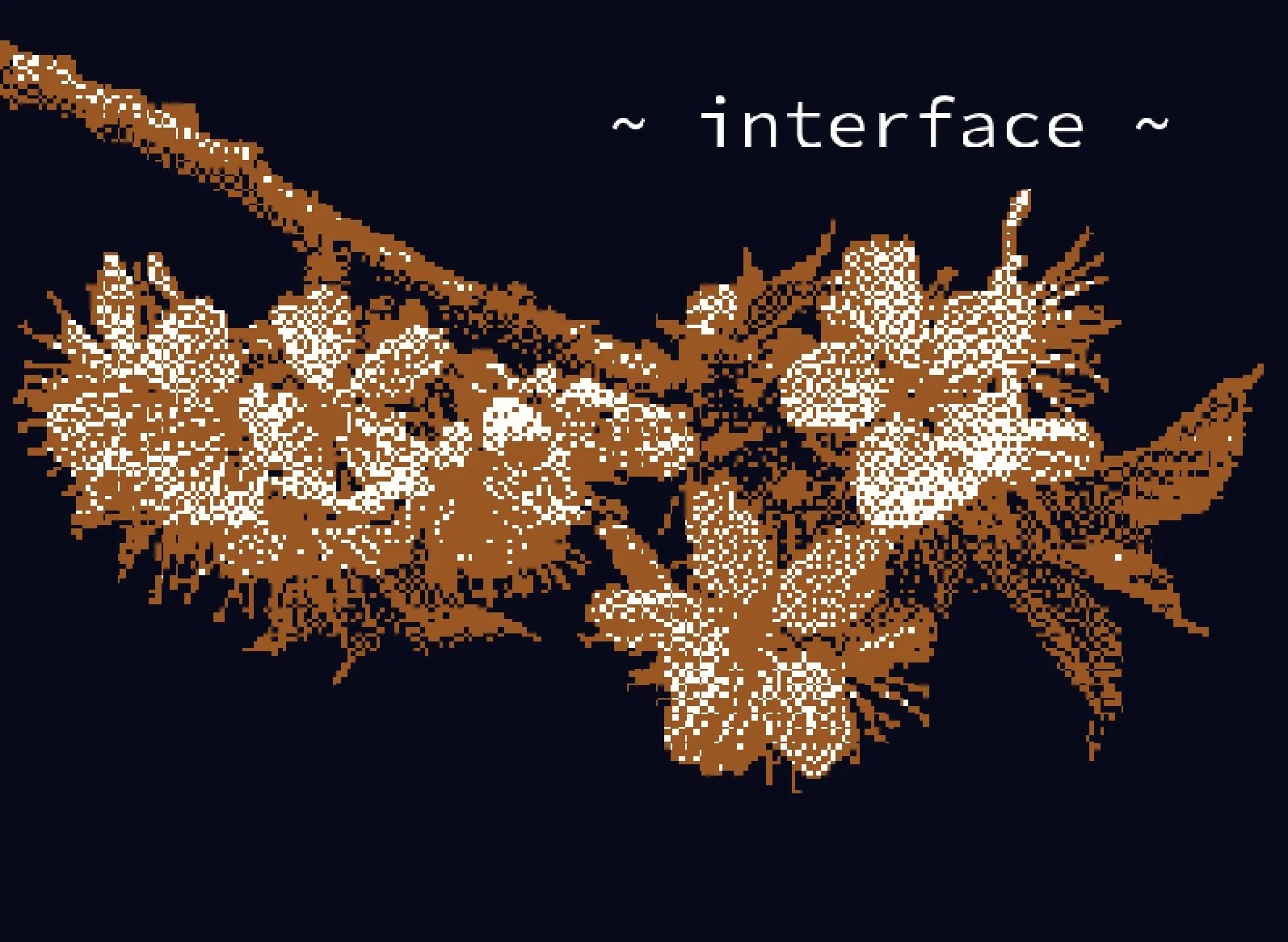
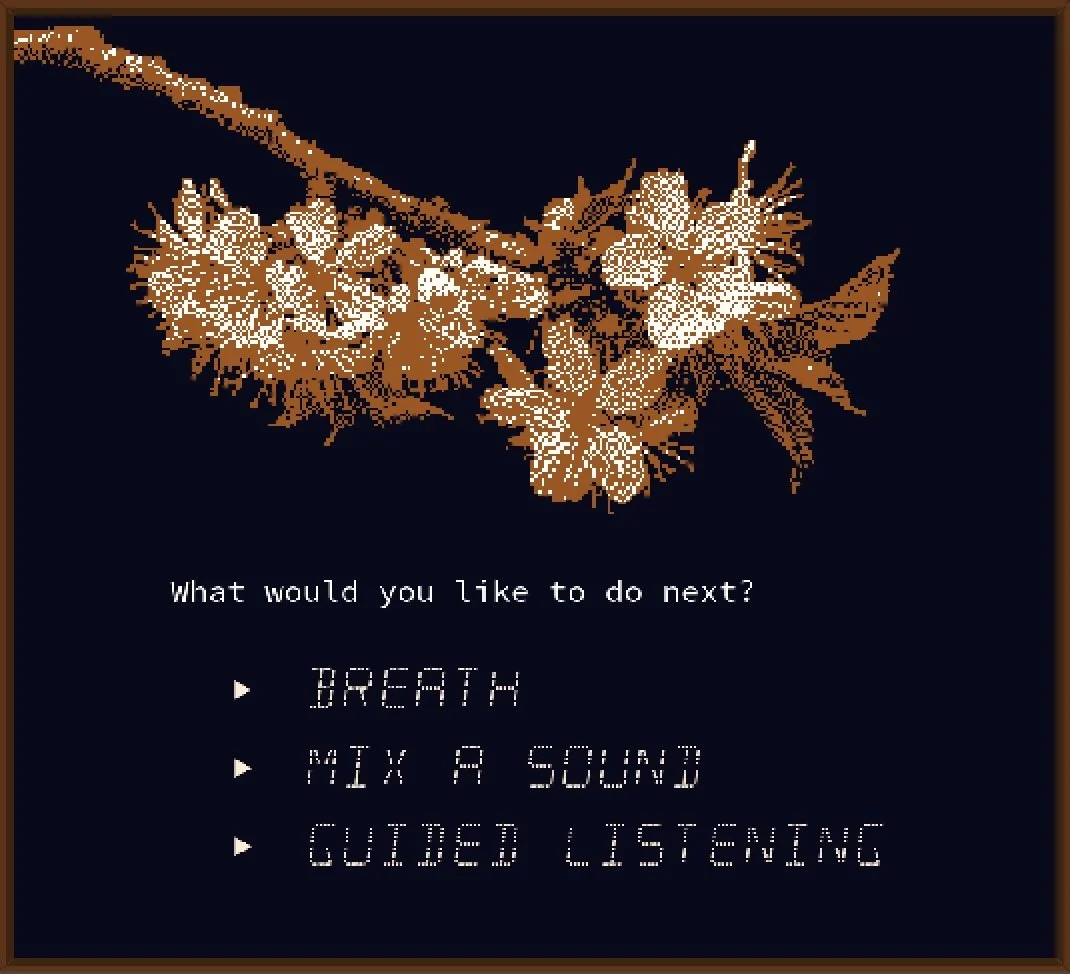
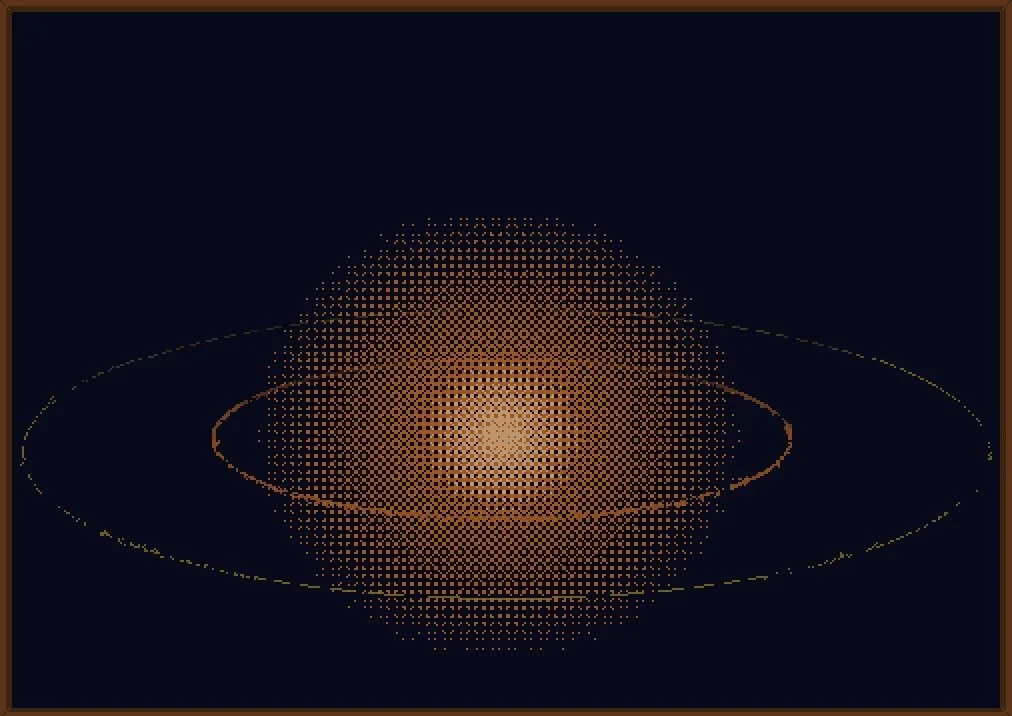
interface
interface - sometimes when i finally close the computer, hit power on the remote, put the phone down, etc, my head swims and i look around and think "oh yeah, weird, i'm *here*." but i wasn't here at all just now.
is there a way for the screen to take us, not further away from here - this space around us, and our body in it - but to take us *more* here? to bring us more presently into the space and less into the screen? well, let's see. maybe if we can run through a couple little settings here, check in on our senses, do a quick calibration or two, maybe we can listen to the space and we can try getting us tuned into the room...
notes - interface is about 5-8 minutes long, begins at the computer screen, is very audio and listening based, and includes invitation to move around and listen to the physical space around you.
Artist Bio:
Gabriella Ciurcovich is a musician and media artist based in K'jipuktuk/Halifax. Most people know her as an upright bassist, playing regularly in the improvised music scene in Halifax and the Creative Music Workshop, in many longer standing projects such as rumé kover, Many Worlds, and the Dusty Halos, and as a collaborator in dance + music works. She studied jazz bass during her undergrad in Toronto, and believes she has the wonderful music community here to thank for helping nudge her towards a much more peaceful and joyful relationship with music again, many years post-music school... She also sings and writes songs for her own project, popuri, and will maybe release something sometime.
Aside from music, Gabriella has always enjoyed drawing, taking pictures, messing around with photo editing and tiny film projects, playing video games, trying to learn a bit of programming, trying to repair stuff, taking a laptop apart to clean under the keys and kind of look around etc... and all of that does feel like it's always been heading towards her being able to make art in some kind of immersive or interactive media. interface is her first media piece, and Here and Now is her first time exhibiting - Thanks CFAT and all the folks at MAS, and Emily, Nikki, and Taba!
Sonic Placemaking
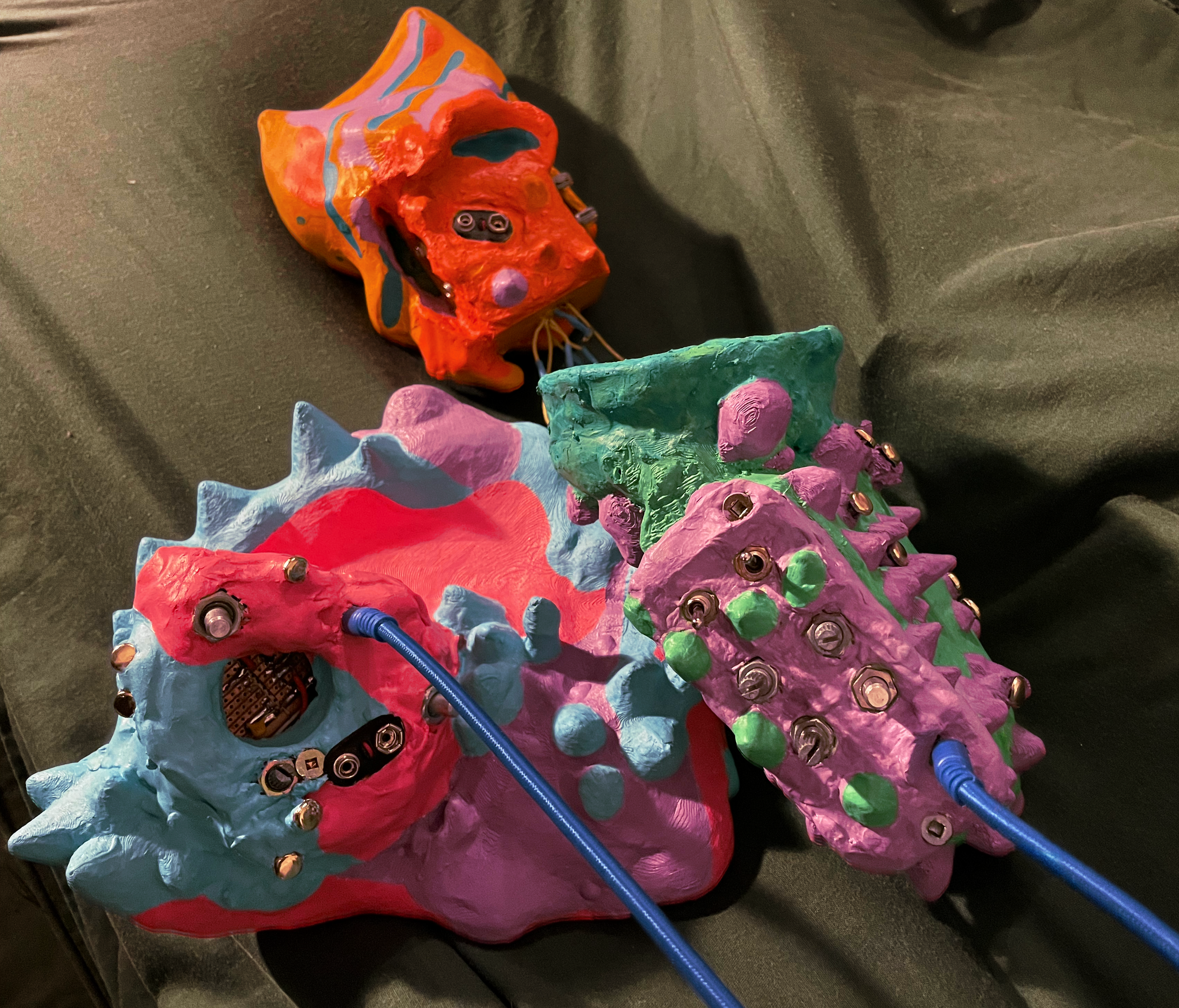
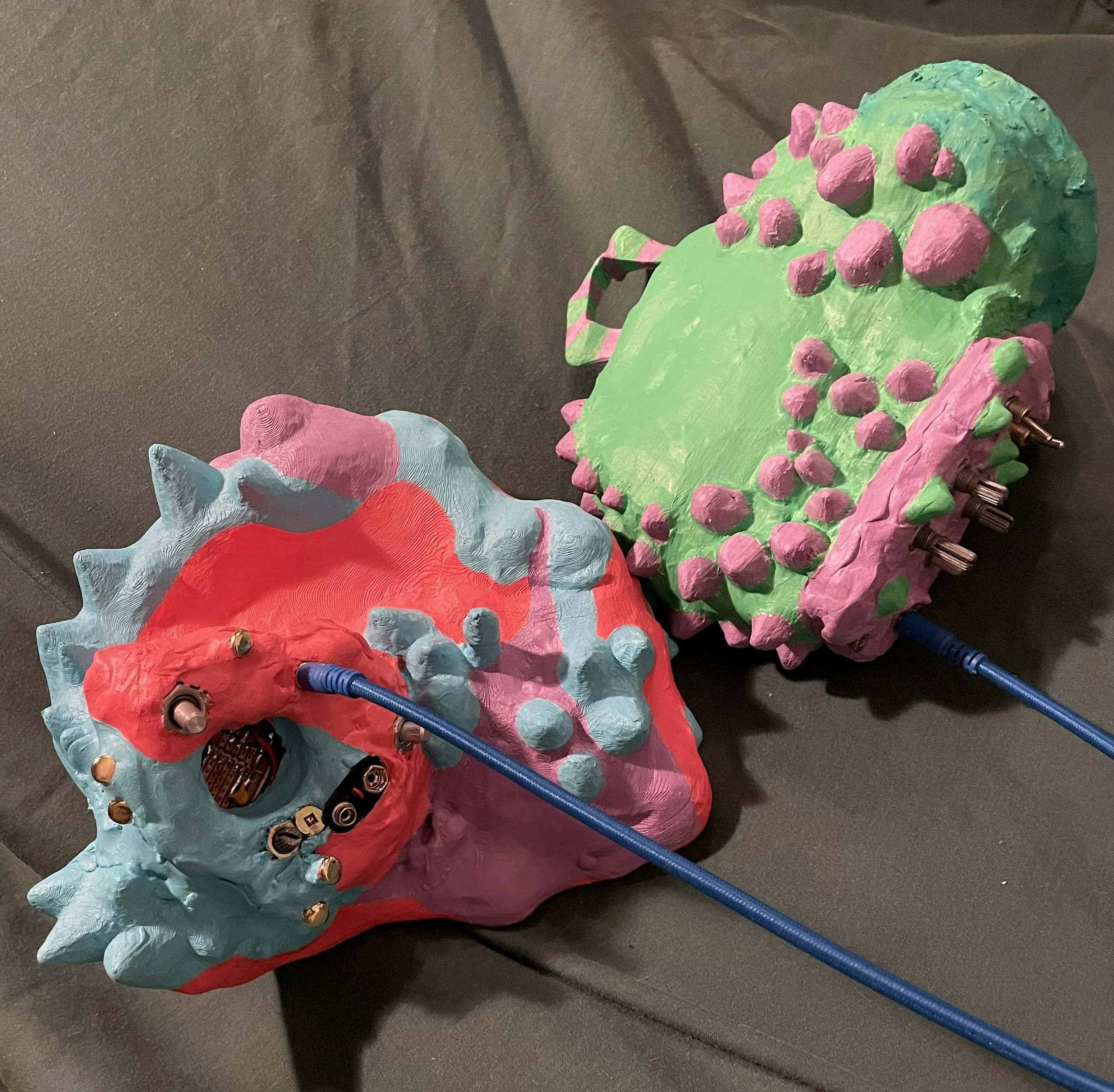
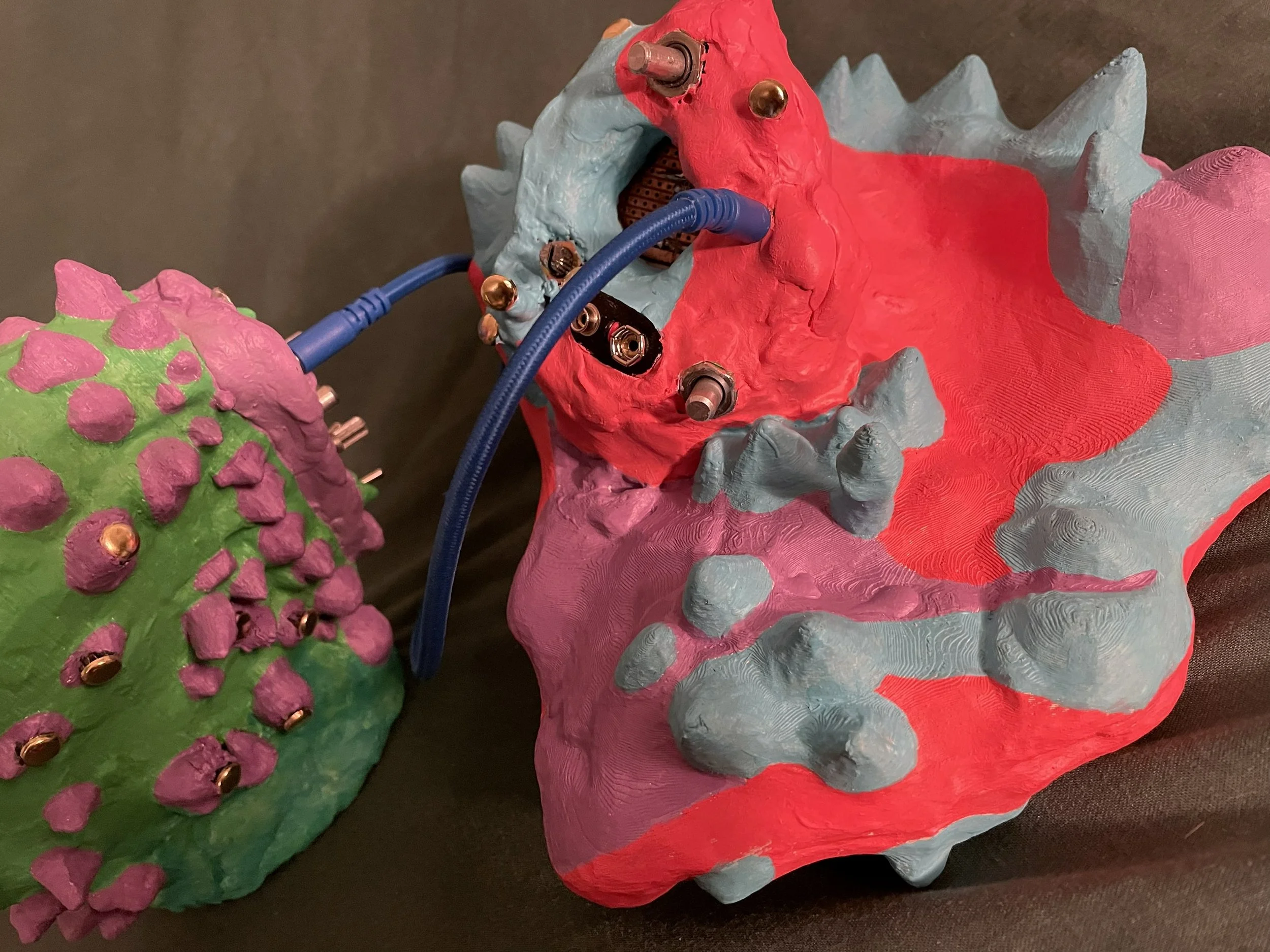
For the Media Art Scholarship, I have created experimental electronic instruments that demand thoughtful interactions. These are made intentionally in stark contrast to contemporary trends and features in consumer electronics. Much has been said about the toxicity of modern tech design trends, but I wish to specifically respond to the monetization of our attention. Portable devices in particular are designed to sustain user “engagement” for as long as possible, at the expense of the depth of such experiences. This in part has led to me designing placemaking instruments: instruments that ask the player to engage in improvisational play as a means of giving them autonomy, while grounding them in space and time. In order to encourage thoughtful, intentional interactions, the methods of playing the instruments are largely unfamiliar and nonlinear. Instead of providing keys, buttons, strings, or pads arranged according to a specific scale, players must discover how each instrument operates by exploring its physical characteristics. It’s a process of negotiating with these devices, and coaxing out sounds from their circuits. In so doing, players are able to attain experiences that allow them to “decorate” rather than kill the time they have.
Artist Bio:
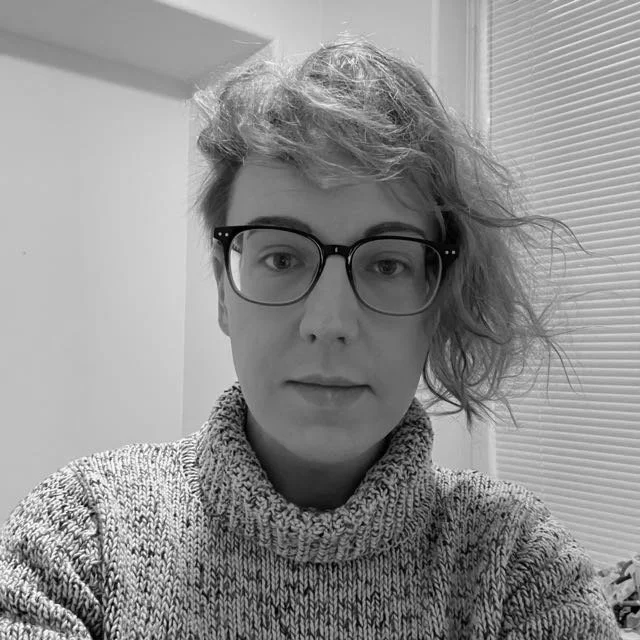
Nicole Leroy is a French-American artist whose practice challenges the boundaries between commercial culture and technology. She crafts multimedia electronic sculptures using found objects and entertainment media, aiming to provoke thought about the role of consumerism in shaping human interactions. With a focus on visual and popular culture, Nicole explores the autonomy of everyday objects, transforming them into dynamic works that invite audiences to question conventional notions of empathy, relationships and authenticity.
Four Minutes and Thirty-Three Seconds
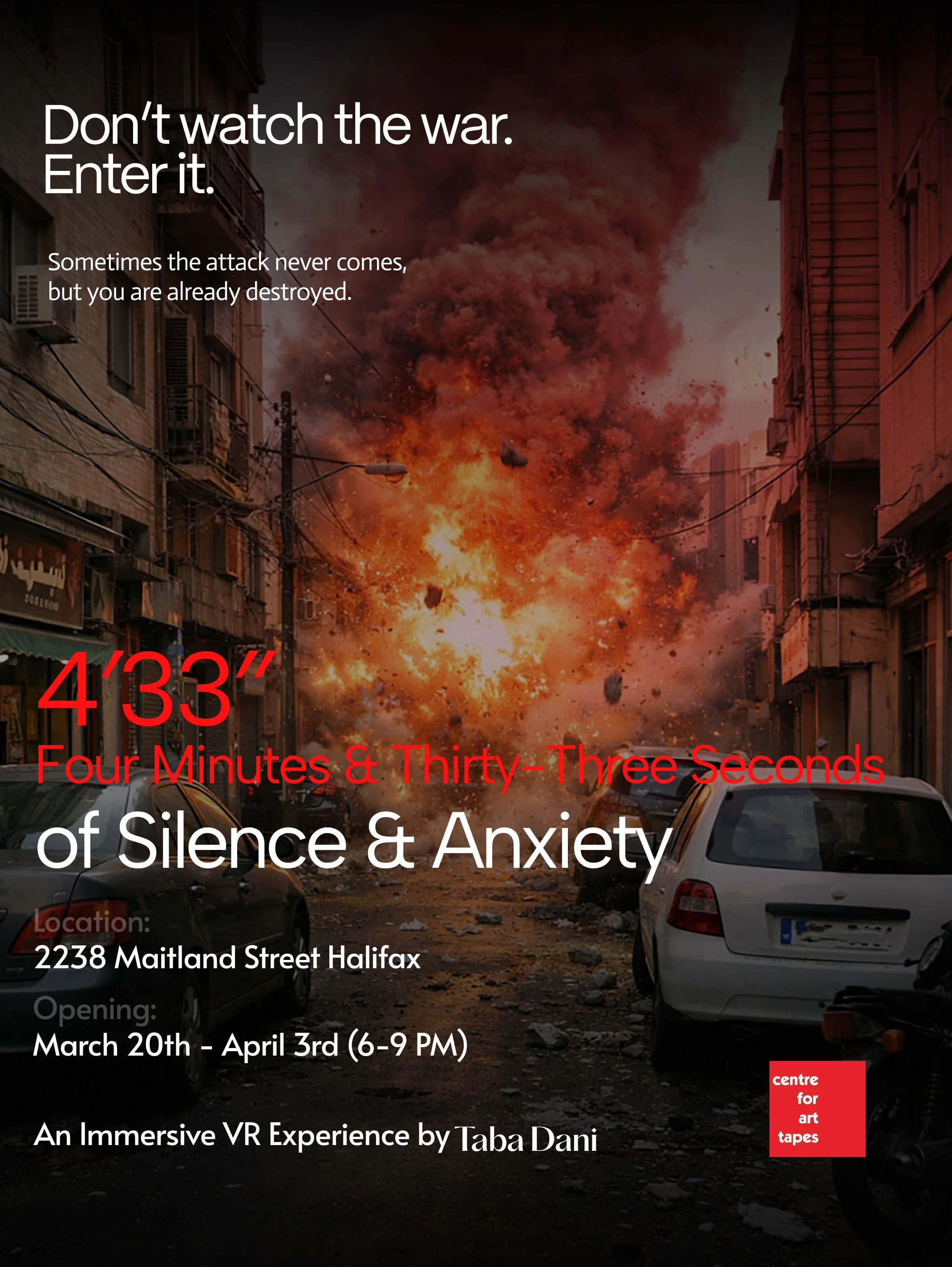
Step in and immerse yourself in a fully engaging experience. Using VR technology, you will find yourself in the heart of an alley that Israel has announced it will attack today. Every sound, every light, every movement draws you deeper into the story. You will be present in this alley, either just before the attack or in the midst of a real moment of conflict and destruction. This brief but powerful experience allows you to feel tension, anxiety, and human reflection in a realistic and immediate way. The exhibition “Four Minutes and Thirty-Three Seconds” invites you not just to watch, but to be actively present, take part in the experience, and witness your own reactions. This is a visual and sensory journey that only VR can provide—there’s no standing on the sidelines; you are part of the story. Take a moment, step into the alley, and fully experience the reality and urgency of the moment. This exhibition offers a confrontation you might never encounter in real life, yet in these few minutes, every second feels real and tangible. Can you handle it? Come and experience Four Minutes and Thirty-Three Seconds.
Artist bio:
Taba Dani (he/him) has an academic background in the philosophy of art and, as a multimedia artist, creates work that blends Western modern and contemporary art with the artistic traditions of Iran and the Middle East. He is a visual storyteller and narrative artist, and his practice spans video, graphics, and storytelling. In recent years, Taba has focused on VR and other interactive tools to create immersive and engaging experiences—works that invite audiences into layered visual and experiential spaces, fostering a sense of presence and active discovery. His goal is for the audience to play an active role in his work, building meaning and narrative through the immersive experience itself.